
U.S. Business & Financial Readiness Review
Macro Noise vs. Financial Discipline
In a complex economy, the loudest risks are often macro: interest rates, inflation, geopolitical disruption, energy prices, consumer confidence, and policy uncertainty.
But for business owners, CFOs, lenders, investors, and private equity-backed companies, the more important question is often simpler: can the business operate with discipline, visibility, and confidence regardless of the macro environment?
The U.S. economy continues to expand, but the operating environment remains uneven. Real GDP increased at a 2.0% annualized rate in Q1 2026, following 0.5% growth in Q4 2025, according to the Bureau of Economic Analysis. Growth was supported by investment, exports, consumer spending, and government spending, while imports weighed on GDP.
At the same time, uncertainty remains elevated. The Federal Reserve noted in April 2026 that economic activity has been expanding at a solid pace, but inflation remains elevated, and developments in the Middle East are contributing to a high level of uncertainty about the outlook.
The macro backdrop may be uncertain, but enterprise value is still created through execution, margin discipline, cash visibility, and financial readiness.
Figure 1: U.S. Economic Snapshot
| Indicator | Latest Reading | Source | Business Interpretation |
|---|---|---|---|
| Real GDP Growth | 2.0% annualized, Q1 2026 | BEA | Economy is still expanding, but growth is not risk-free |
| Prior Quarter GDP Growth | 0.5%, Q4 2025 | BEA | Q1 rebounded from a weak prior quarter |
| Unemployment Rate | 4.3%, March 2026 | BLS | Labor market remains stable but selective |
| Nonfarm Payroll Change | +178,000 jobs, March 2026 | BLS | Hiring continues, but not broadly across every sector |
| Manufacturing Capacity Utilization | 75.3%, March 2026 | Federal Reserve | Manufacturing operating rate remains below long-run average |
| Durable Goods Orders | +0.8%, March 2026 | Census Bureau | Business investment demand remains present |
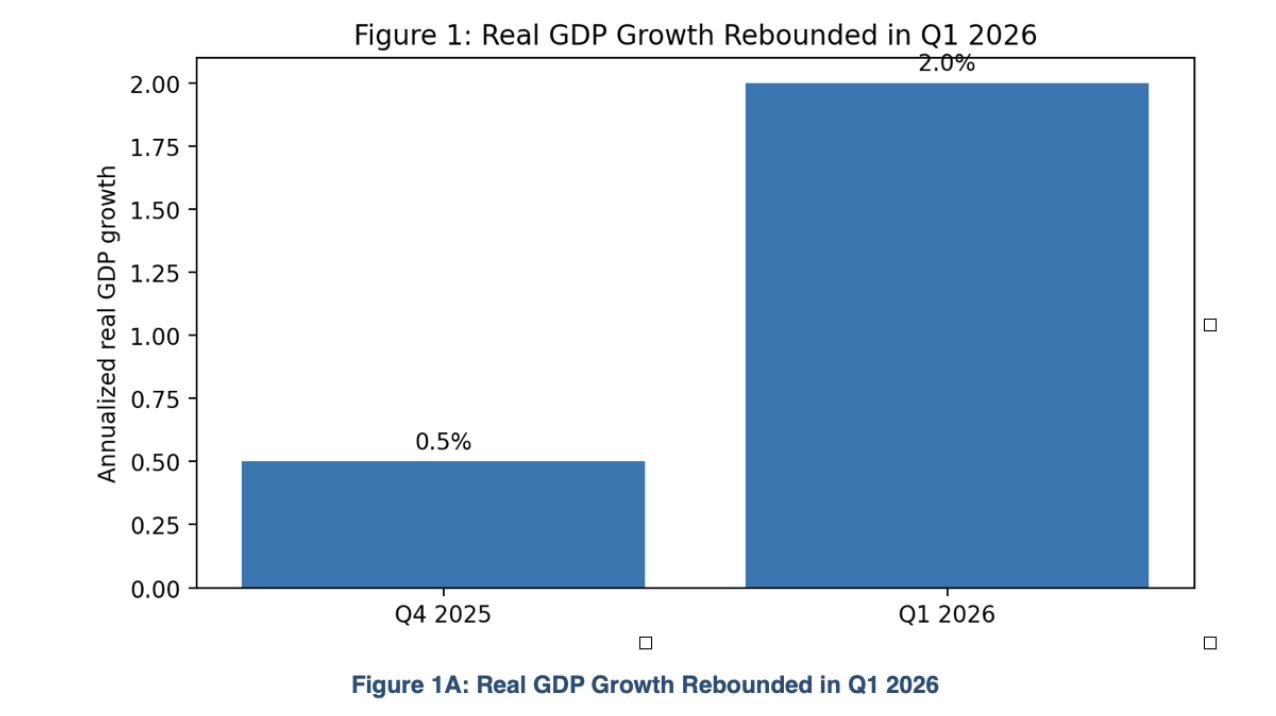
Source: BEA, GDP Advance Estimate, Q1 2026 | Link
Investment vs. Execution
Capital investment remains one of the defining themes of 2026. Durable goods orders increased 0.8% in March 2026 to $318.9 billion, following three consecutive monthly declines. Computers and electronic products led the increase, rising 3.7% to $29.6 billion, according to the U.S. Census Bureau.
This aligns with a broader market theme: companies are continuing to invest in technology, automation, AI infrastructure, equipment, and productivity tools. Goldman Sachs estimates that AI-related capital expenditure could reach $765 billion annually in 2026 and grow to $1.6 trillion by 2031 under its baseline model.
Investment alone does not create value. The real question is whether management can convert spending into measurable productivity, margin expansion, and cash flow improvement.
This is where many companies face a gap. They invest in systems, headcount, automation, or growth initiatives, but do not always have the accounting structure, KPI discipline, or reporting cadence needed to measure ROI. At MatrixMindz, our CFO Advisory, FP&A, ERP/accounting system support, and management reporting services help companies move from spending on growth to understanding whether growth is profitable, scalable, and financeable.
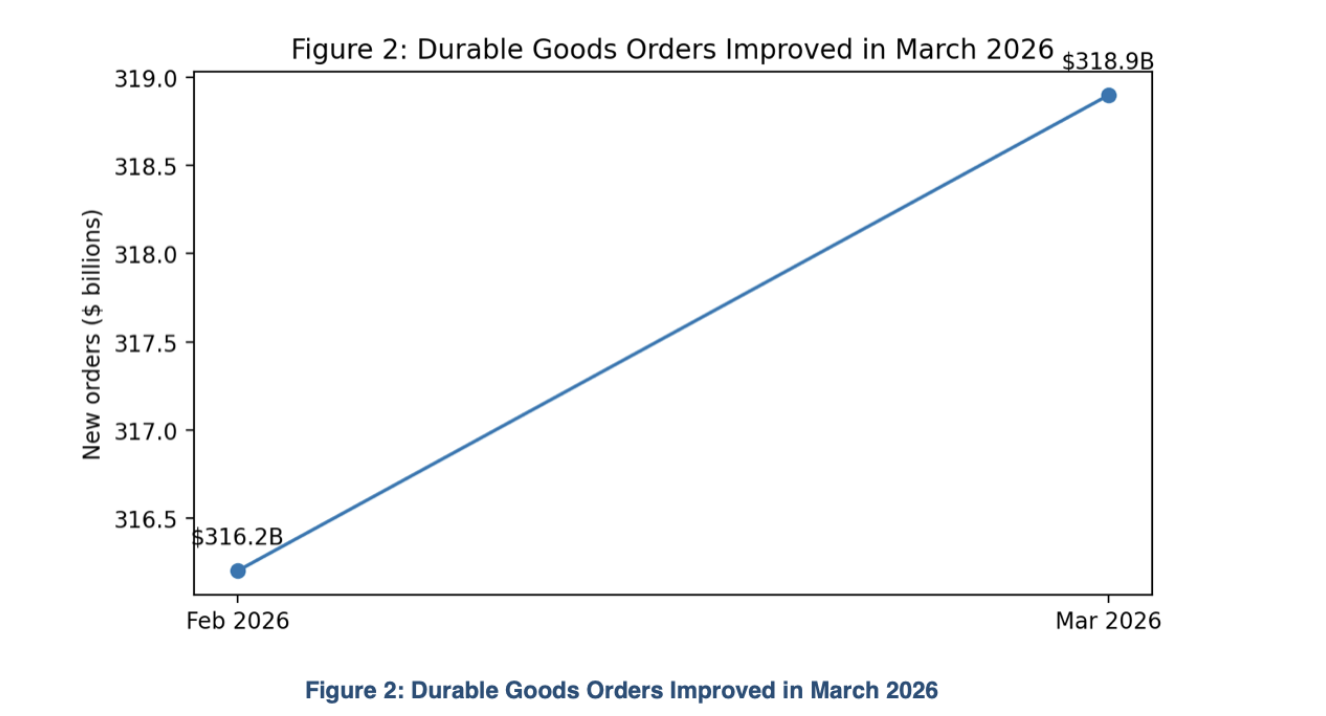
Source: U.S. Census Bureau, Advance Report on Durable Goods Manufacturers | Link
AI, CapEx, and Productivity: Opportunity vs. Risk
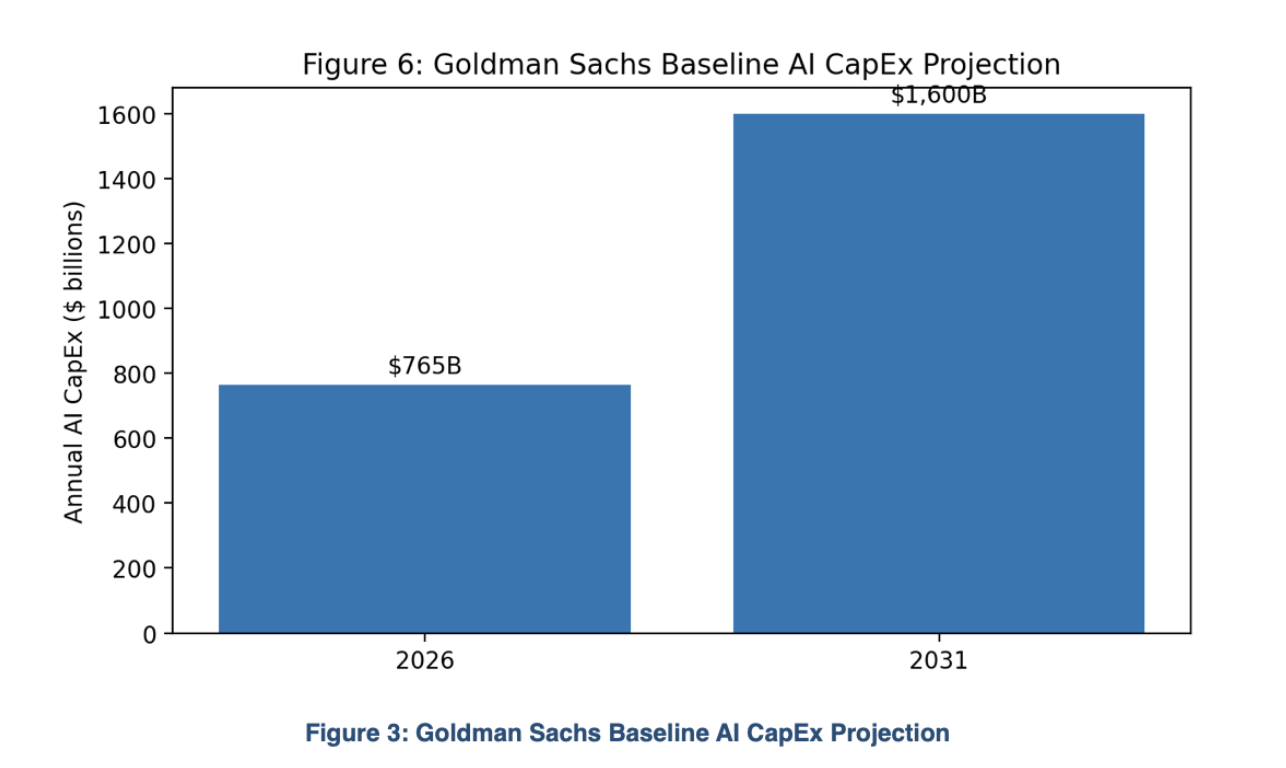
Source: Goldman Sachs Research, AI CapEx baseline model | Link
| Market Theme | Opportunity | Financial Risk | MatrixMindz Support |
|---|---|---|---|
| AI investment | Productivity gains | Poor ROI tracking | KPI dashboards and financial modeling |
| Automation | Lower manual workload | Process disruption | Finance process redesign |
| ERP upgrades | Better data infrastructure | Poor implementation or weak adoption | ERP/accounting system support |
| CapEx expansion | Scale and growth | BLS | Forecasting and capital planning |
| Headcount leverage | Higher revenue per employee | Cash flow pressure | Budgeting and workforce planning |
Margins vs. Revenue Growth
Revenue growth still matters, but in today's environment, margin quality matters more. Public company earnings have remained strong. FactSet reported that the blended year-over-year earnings growth rate for the S&P 500 was 27.1% for Q1 2026, with blended revenue growth of 11.1%. FactSet also reported that the blended net profit margin for the S&P 500 was 13.4% for Q1 2026.
That is an important market signal: companies are still protecting profitability, even as macro risks remain elevated. But private and middle-market companies cannot assume that top-line growth automatically creates enterprise value.
• Poor cash conversion
• Rising labor or input costs
• Weak gross margin controls
• Inventory issues
• Delayed billing
• Unreliable job costing
• Customer concentration risk
• Manual or inconsistent close processes
Buyers and lenders do not only ask whether revenue grew. They ask whether revenue was profitable, collectible, recurring, supported, and whether EBITDA is real.
Revenue Growth Is Not the Same as Financial Strength
| If Revenue Is Growing But... | The Risk | What Management Needs |
|---|---|---|
| Gross margin is declining | Growth may be unprofitable | Margin bridge analysis |
| A/R is increasing faster than sales | Cash conversion is weakening | A/R aging and collections review |
| Inventory is rising faster than demand | Working capital is trapped | Inventory rollforward and reserve analysis |
| EBITDA relies on manual adjustments | Earnings may not be supportable | QoE-style EBITDA validation |
| Monthly close is delayed | Leadership is operating on stale data | Monthly close discipline |
Labor Stability vs. Productivity Pressure
The labor market remains stable, but increasingly selective. In March 2026, total nonfarm payroll employment increased by 178,000, and the unemployment rate was little changed at 4.3%, according to the Bureau of Labor Statistics. Job gains occurred in health care, construction, and transportation and warehousing, while federal government employment continued to decline.
This is not a labor market where companies can simply hire their way through every problem. Management teams are asking harder questions: Can we do more with the same team? Are our reporting processes too manual? Do we know revenue per employee by business unit? Are finance and operations working from the same data?
Productivity gains require financial infrastructure. Without clean data and reliable reporting, it is difficult to know whether productivity is improving or simply being assumed.
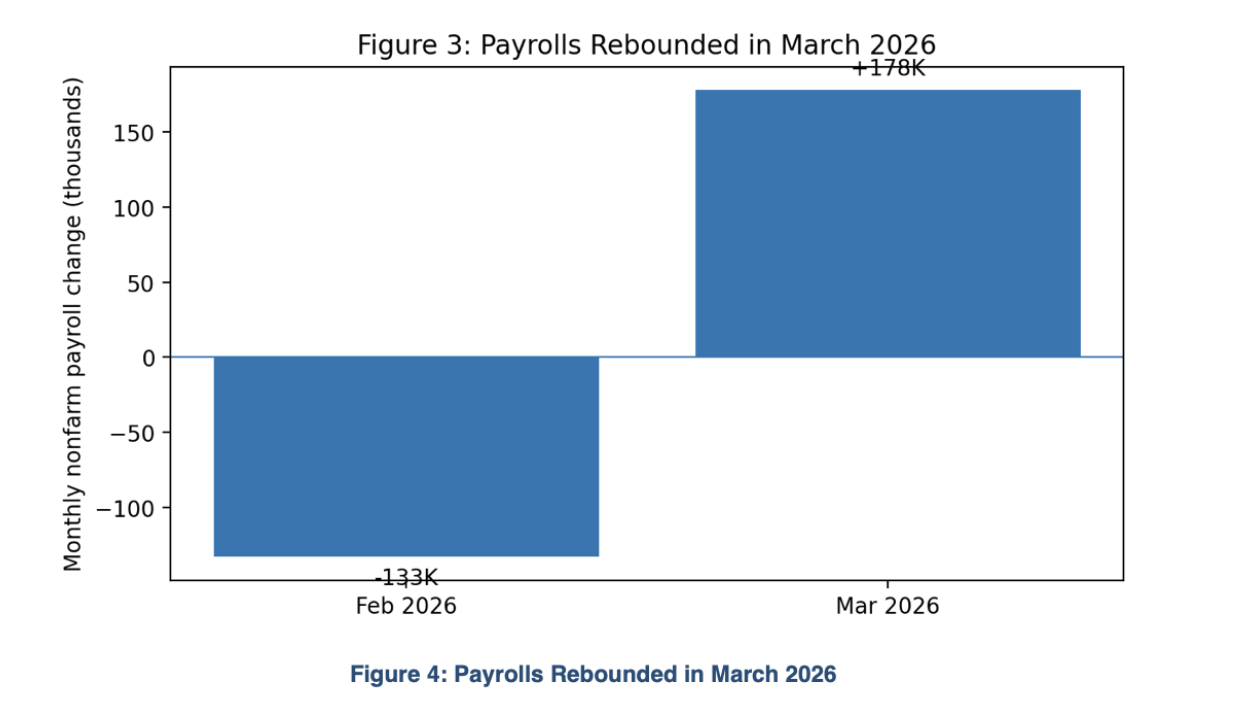
Source: BLS, Employment Situation - March 2026 | Link
Small Business Confidence vs. Financial Readiness
Small and mid-sized businesses are still operating in a cautious environment. The NFIB Small Business Optimism Index fell to 95.8 in March 2026, below its long-term average, while uncertainty remained elevated. This matters because uncertainty affects owner behavior: businesses may delay hiring, postpone capex, slow expansion, or become more cautious about financing.
Uncertainty should not freeze decision-making. It should increase the need for better financial visibility. For business owners, the key question becomes: do we have the financial reporting, cash flow forecasting, and scenario planning needed to make decisions with confidence?
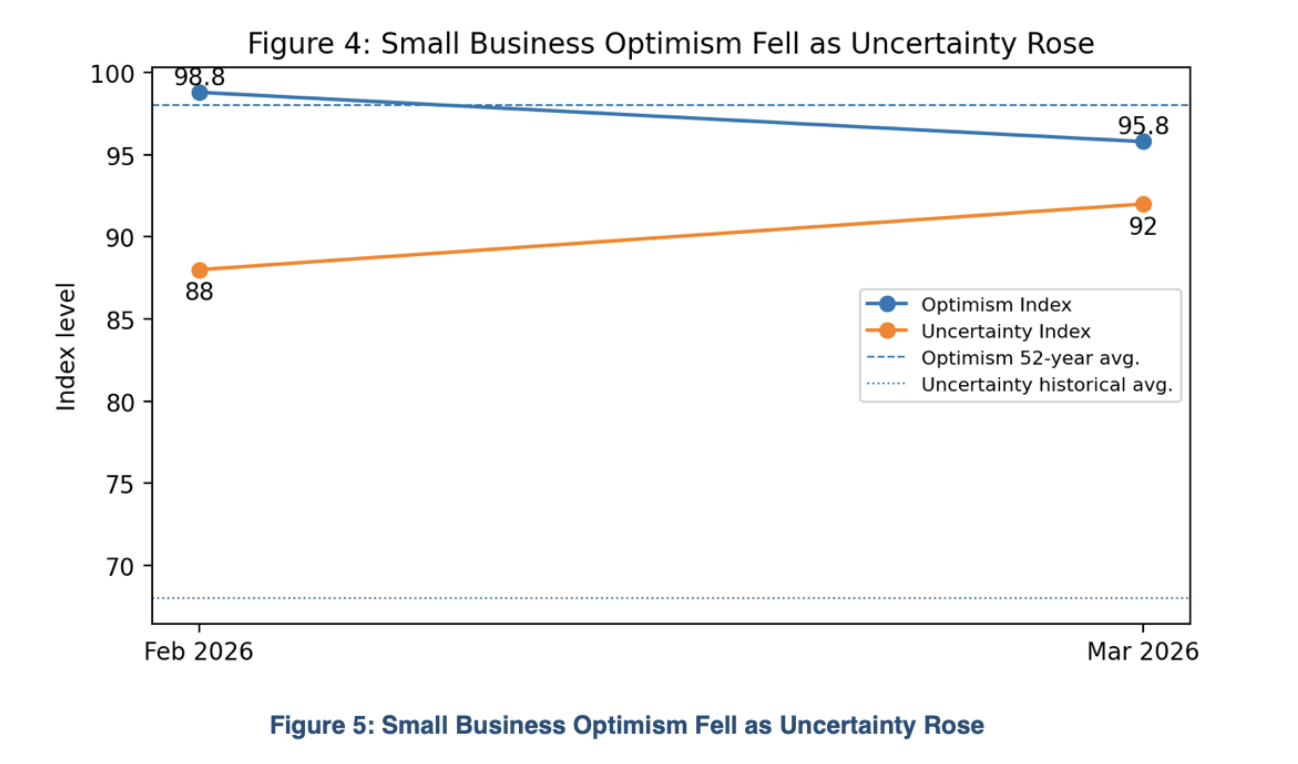
Source: NFIB, Small Business Economic Trends | Link
Small Business Uncertainty and Finance Function Response
| Business Concern | Typical Owner Reaction | Better Finance Response |
|---|---|---|
| Uncertain demand | Delay expansion | Scenario-based forecasting |
| Higher input costs | Raise prices reactively | Gross margin and pricing analysis |
| Labor pressure | Freeze hiring | Workforce productivity analysis |
| Lender caution | Avoid financing | Lender-ready reporting package |
| Cash flow concern | Cut spending broadly | 13-week cash flow forecast |
| Transaction uncertainty | Delay exit planning | Sell-side readiness and QoE preparation |
Manufacturing Capacity vs. Working Capital Discipline
Manufacturing remains mixed. The Federal Reserve reported that manufacturing capacity utilization declined to 75.3% in March 2026, which was 2.9 percentage points below its long-run average. For manufacturers, distributors, and product-based businesses, this creates a planning challenge. Lower utilization can pressure margins, while inventory, labor, vendor commitments, and production schedules can absorb cash.
Companies need reporting that connects sales demand, inventory movement, production capacity, labor efficiency, gross margin, working capital, and cash flow. A simple income statement is not enough. MatrixMindz helps companies build reporting packages that connect the general ledger to operational drivers, so leadership can understand not only what happened, but why it happened.
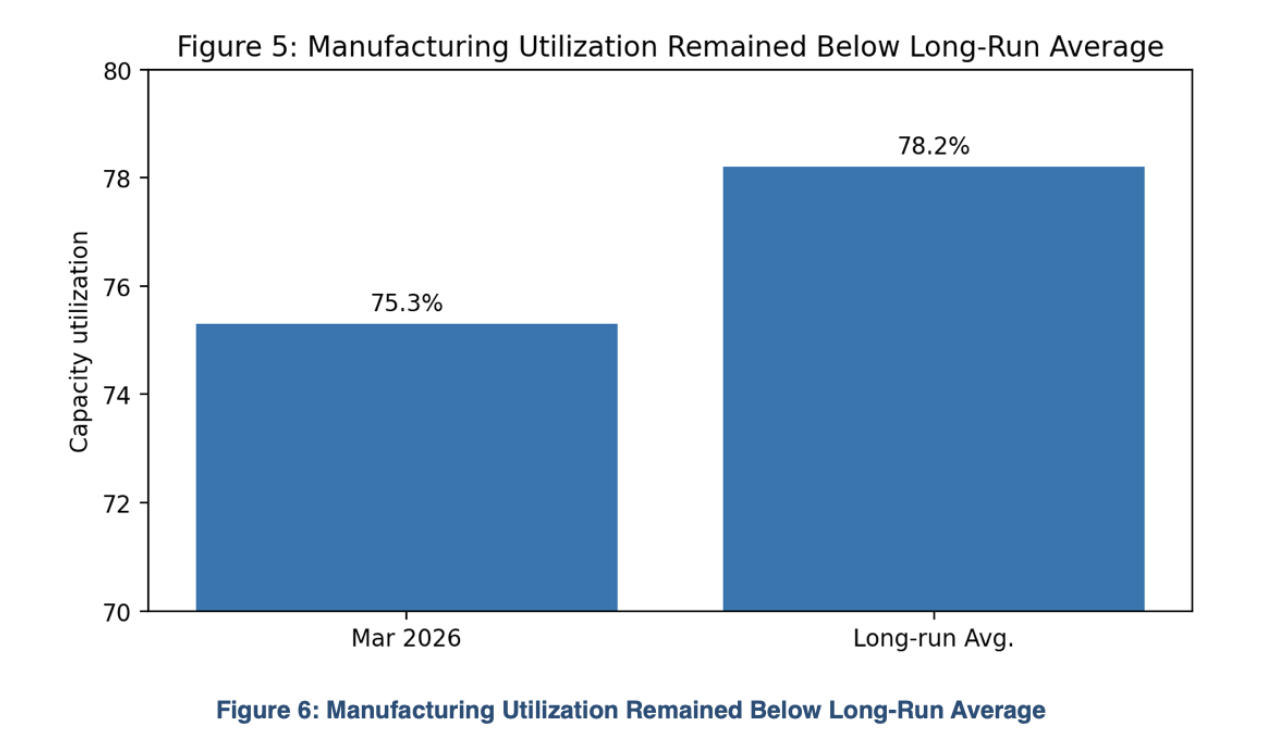
Source: Federal Reserve G.17, Industrial Production and Capacity Utilization | Link
Market Review: What Reputable Sources Are Saying
Several public market and economic sources point to the same broad theme: growth remains present, but it is increasingly dependent on productivity, AI investment, disciplined execution, and margin protection.
| Source | Key Market View | Why It Matters for Businesses |
|---|---|---|
| BEA | U.S. GDP grew 2.0% annualized in Q1 2026 | Economy is expanding, but businesses still need visibility |
| Federal Reserve | Inflation remains elevated and uncertainty is high | Cash flow planning and rate sensitivity remain important |
| BLS | Labor market remains stable but selective | Companies need workforce productivity metrics |
| Census Bureau | Durable goods orders improved, led by computers/electronics | Tech and equipment investment remain important |
| FactSet | S&P 500 earnings and margins remain strong | Margin quality and operating leverage matter |
| Goldman Sachs | AI capex remains a major investment theme | Companies must track ROI on AI and automation |
| J.P. Morgan | 2026 outlook shaped by AI, fragmentation, and inflation | Business planning requires a new playbook |
J.P. Morgan's 2026 outlook describes a market environment shaped by three major forces: AI, fragmentation, and inflation. That framing is highly relevant for business operators because it reinforces the need for better planning, agility, and financial discipline.
Outlook: The Micro Will Matter More Than the Macro
The broader economy is not weak; it is complicated. GDP is growing. Employment is stable. Business investment remains active. AI-related spending is significant. But inflation, geopolitical uncertainty, uneven consumer behavior, and margin pressure continue to create risk.
You cannot control the macro environment, but you can control the quality of your financial infrastructure.
1. Clean, Timely Financials
Monthly reporting must be accurate, reconciled, and decision-ready. Leadership teams cannot manage effectively using stale or unreliable numbers.
2. Cash Flow Visibility
Rolling forecasts, 13-week cash flow models, and working capital dashboards are critical in uncertain markets.
3. Defensible Earnings
For lenders, investors, and acquirers, EBITDA must be supportable, not just adjusted. Companies preparing for financing, M&A, or investor diligence need clean schedules, reconciled accounts, and clear explanations of performance.
Where MatrixMindz Adds Value
MatrixMindz Financial Consultants helps businesses build the financial discipline needed to grow, raise capital, complete transactions, and operate with confidence.
1. Managed Accounting Services
Outsourced and co-sourced accounting, monthly close, reconciliations, financial reporting, and audit-ready books.
2. CFO Advisory & the FP&A
Budgets, forecasts, KPI dashboards, cash flow models, board reporting, and strategic decision tools.
3. Transaction Advisory
Buy-side and sell-side Quality of Earnings, financial due diligence, lender readiness, and transaction preparation.
4. Financial Readiness & Systems Support
ERP/accounting system improvements, stronger controls, data cleanup, and preparation for audits, investors, lenders, or exits.
Final Thoughts
In 2026, uncertainty is unavoidable. Poor financial visibility is not.
The companies that outperform will be those that understand their numbers, protect margins, manage cash, and make decisions from reliable data rather than instinct.
At MatrixMindz, we help businesses turn financial complexity into clarity, so leadership teams can focus on growth, execution, and long-term value creation.
Want clearer financial visibility and stronger decision-making?
Source Note
Data and chart references are based on publicly available information from the Bureau of Economic Analysis, Bureau of Labor Statistics, Federal Reserve, U.S. Census Bureau, NFIB, FactSet, Goldman Sachs, J.P. Morgan, and other reputable public market sources. MatrixMindz does not use or redistribute proprietary Bloomberg terminal data.
Disclaimer
This article is for informational and educational purposes only and does not constitute tax, legal, investment, accounting, or financial advice. Readers should consult their tax, legal, accounting, and financial advisors before making decisions based on their specific facts and circumstances.